Thursday, March 14, 2019

Classroom Management Tips Every Teacher Can Use


As any teacher knows, effective classroom management is the key when it comes to getting your students to learn.  I am always on the lookout for new classroom management techniques, even when we have guest speakers, such as author, Gary Hogg, who came to teach us how to be better writers.  After all, if a person is able to manage 300+ students during an assembly, they must have a few tricks up their sleeve!  here are a few classroom management tips I picked up during his visit that any teacher can use!


1. Use Catch-Phrases and Visual Aids

In addition to teaching the students about writing, Gary also gave them important life lessons about managing distractions, putting effort in your work, and more. As you can see in the picture above, Gary Hogg had posters of a variety of different catch phrases that he used to teach a certain point about behavior and work ethic.   

He would tell the students a story using the catch phrase several times. Each time he said the catch phrase, he gestured towards the poster with that phrase.  The students caught onto these phrases quickly, and began implementing them almost immediately.  


I have been able to use these posters to reinforce the catch phrases in our classroom.  
2. Manage Your Distractions


One of the biggest problems in teaching has got to be distractions!  I know you have been there, in the thick of teaching a lesson when you notice that one of your students is playing with something and not paying attention at all!

Well, Gary Hogg has obviously been there too, because he had a catch phrase a poster for this one!  Manage your Distractions!

The very first thing that he told the students was to put their pencils underneath their notebooks so that they wouldn't be distracted while he was teaching them.  So simple, yet effective!  The students weren't playing with the pencils, or going on ahead before directions were given!  This is definitely an idea that I have kept going in the classroom and it has been a game changer!


He also told them that distractions happen in twos - when you become distracted, you distract someone else.  He said, "It will distract me and it will distract the person next to you."

You can watch this video of Gary telling a story about a student managing their distractions.


3. Playing Your Brave Card

We all have those students who just don't participate in lessons.  Gary had a phrase for that one too!  Play Your Brave Card!


As he went through one of the activities during our writing workshop, he said to the students, "Some of you have not raised your hand, are you playing your brave card?"  Hands immediately shot up!

 Gary Hogg talks about Playing Your Brave Card in this video below.


4. Encourage Students to Do Their Best - Be Amazing, Not Annoying

We all have students who don't put forth their best effort!  It's disheartening to see a student who you know can do amazing things just barely even try.  Gary offered the students this advice:

He told the students, "You are amazing but sometimes you let distractions get a hold of you!"  He told them that sometimes when they did their school work, they didn't put forth all of the effort that they could have. He said, "There is not a teacher on Earth that can make you feel smart, if you do not do the work!"


"Be Impressive, Not Lazy!"  He told them!

Would you use any of these classroom management tips?  Leave a comment below to let me know if you would or if you try any of them!

If you want to find more about Gary Hogg, check out his website and his YouTube page!

And... before you go, make sure to visit my Giveaways page to enter our weekly giveaway to win a $25 Teachers pay Teachers gift card!

 I would love to hear from you! ❤️

Have a question? Idea for a resource you might find helpful?


Be so kind and leave a comment below.


Saturday, March 2, 2019

March Teaching Resource Round-Up

March Teaching Resource Round Up! 

Looking for some awesome resources to use in the classroom this month?  Check out this growing list of blog posts, freebies, pins, product suggestions and more!  Feel free to add your own suggestions in the linky below!


Give your students a shout out for St. Patrick's Day! This freebie is a great way to give your class shout-outs during the weeks leading up to St. Patrick’s Day. Simply print out the template on colored paper and write down the shout-outs you want to give your class. I posted one new shamrock each day and my students raced to read each new one.


This activity is featured in my blog post Shamrock Shout- out. Head on over if you want to see more about how I used it in my classroom.

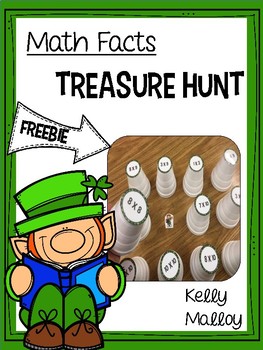
St. Patrick's Day Math Facts Treasure Hunt FREEBIE


If your students need to practice math facts, you will love this St. Patrick's Day themed treasure hunt activity.  You can read all about it and grab the freebie here!


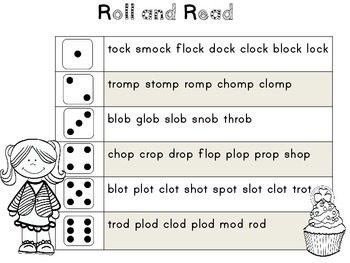
Free St. Patrick's Day Blend and Digraph Roll and Read Sample

This print and play game from 180 Days of Reading  will have your students rolling and reading!  Perfect for those students who need practice with blends and digraphs!


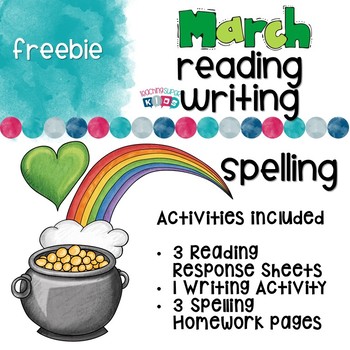
Reading Writing and Spelling Sample Activites

This great little freebie from Teaching Super Kids includes March themed reading, writing, and spelling activities!

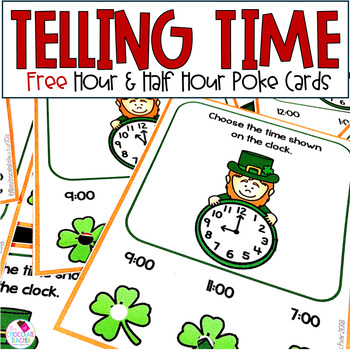
Telling Time to the Hour and Half Hour on a Clock FREE

These poke cards from The Chocolate Teacher are a great way to help students practice telling time to the hour and half hour.  They are self-checking so are perfect for an independent center.

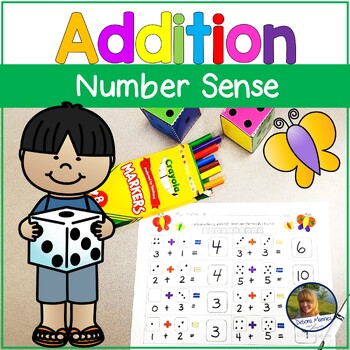
Free Number Addition to 10 Dice Game Butterfly Theme


Math facts are always something my students need practice with!  This addition to ten freebie from Debora Marines TeachMagically is perfect for that extra practice!


St. Patrick's Day Freebie - Math

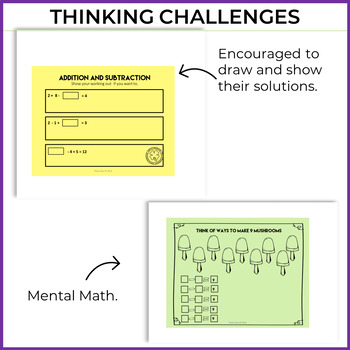
This math activity from Sparking Children's Thinkibility puts your students in the driver's seat as they create their own math problems!

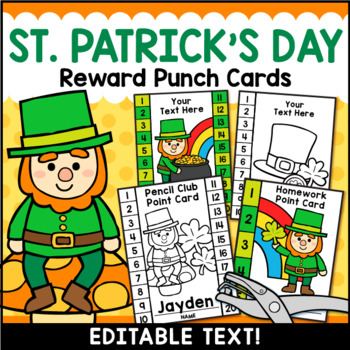
St. Patrick's Day Punch Cards Editable Classroom Management FREEBIE!

These St. Patrick's Day Reward Punch Cards from Little Red are a great classroom management tool!  The resource is editable, so it can be used for so many skills or habits that you need to have your students work on from remembering to turn in homework, to books read, to being kind to others, to???


How to Catch a Leprechaun Flip Book
This flip book was designed by the Speech Attic to be a companion to How to Catch a Leprechaun by Adam Wallace and Andy Elkerton. This book companion addresses a variety of language skills such as comprehension, describing, sequencing, following directions, vocabulary, and more! 


If you are looking for more St. Patrick's Day resources, check out my Holidays in the Classroom - St. Patrick's Day Pinterest Board with over 260 resources!

Pi Day Bookmarks ~ Color and black and white coloring pages (FREE)


If you have other resources for March, feel free to add them to the linky below!


Once you are finished checking out all of these amazing resources, head over to our giveaway page to enter to win a Teachers pay Teachers gift card!


Thursday, February 28, 2019

Pi Day Fun in the Upper Elementary Classroom


Have you ever thought about celebrating Pi Day on March 14 (3/14)?  Pi Day is celebrated on March 14th because that day corresponds with the first three digits of Pi (and is coincidentally the birthday of Albert Einstein).

Although it is traditionally celebrated by many middle school and high school teachers, I have found that my students always have an amazing time learning about Pi even if they can't quite calculate it themselves yet!  Read on to see all of the things we do to celebrate Pi in the Upper Elementary Classroom!


This post contains affiliate links. I earn a small commission each time someone makes a purchase using one of my links, which helps to support the blog.  All opinions are my own and I only promote brands and products that I have used myself and truly love. 

Wear Pi


One fun thing about holidays is dressing up to celebrate them.  Why should Pi Day be any different?


My students were also able to wear Pi with these awesome temporary Pi Day tattoos.

Math Jokes  


I print out some of the math jokes in this post, " 36 Math Jokes to Get Every Nerd Through Pi Day", and we share them throughout the day.  My students LOVE them, even the cornier jokes! 

I usually give each student a joke and randomly call on them throughout the day to read them out loud to the class.

Pi Day Read Aloud

My favorite read aloud for Pi Day is Sir Cumference and the Dragon of Pi.  


The book is a math themed adventure where the title character, Sir Cumference is changed into a fire breathing dragon, and his son, Radius is on a quest to change him back.  In order to do this, he must solve a riddle where he discovers a math number that is the same for all circles - Pi!

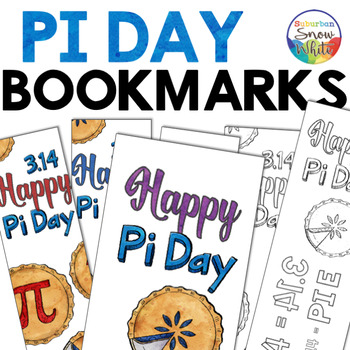
After your read aloud, you can pass out these adorable Pi Day Bookmarks to your students to use in their own books!


Pi Day Bookmarks ~ Color and black and white coloring pages (FREE)


How Many Digits Are in Pi?

My students were so fascinated by this Pi Measuring Tape.  It features the first 400 digits of Pi. They couldn't believe a number could be so long!  


Pi Day Book


We completed these adorable Pi Day books that taught us even more about Pi!


Pi Day Vocabulary

We learned a few Pi related vocabulary words!  

Let Them Eat Pie!    


What Pi Day Celebration would be complete without pie?  We had to end the day with some yummy apple pie!


Do you celebrate Pi Day in your classroom?  I'd love to hear about it!  Leave a comment below!

And... before you go, make sure to visit my Giveaways page to enter our weekly giveaway to win a $25 Teachers pay Teachers gift card!

 I would love to hear from you! ❤️

Have a question? Idea for a resource you might find helpful?


Be so kind and leave a comment below.


Wednesday, February 20, 2019

Descriptive Writing Mini-Lesson - Gary Hogg Author Visit

Do you wish your students wrote more descriptively?  Is their writing rather ho-hum and boring?  You might want to try this descriptive writing mini- lesson based on a recent Gary Hogg author visit.  You will be amazed at how descriptive their writing will be!


This post contains affiliate links. I earn a small commission each time someone makes a purchase using one of my links, which helps to support the blog.  All opinions are my own and I only promote brands and products that I have used myself and truly love.  

Our school was lucky enough to have an author visit from Gary Hogg.  In addition to his whole school assemblies, he also provided writer's workshops for some of our students.  You can get a brief taste of what he shared in this video below:


During the assembly, he mentioned to the students that they needed to use their author's voice.  I was so impressed with my students' author voices after this quick mini-lesson with Gary.


Gary told the students that authors think twice.  He further explained, sometimes authors use a word that is really a category, but it is not really descriptive.  Examples he gave for categories were ice-cream, dogs, and colors.  He told the students that authors looked back at their writing for categories and made them details instead.  Examples of details might be: mint chocolate ice cream, a feisty puppy, or sea foam green.

He had the students practice turning categories into details.  You can see a video of this below where he asks the students to give details about dogs.


Since his visit, I have been using this idea as a warm-up from time to time during writer's workshop to get the students really thinking about details.

After this little warm-up he told them that he was going to have them write for 5 minutes.  He had them close their eyes and think of a memory.  He reminded them to think in details rather than categories.  He played a really funky machine that made music as the students thought.  Then he had them put pencil to paper.

You can watch a video of a similar lesson here:


My students were amazed at how much they wrote in only 5 minutes (to be honest, so was I)!


When the 5 minutes were up, he had them draw a line underneath the writing that they had so far.  Then he told them that writers:

Write
Revise
Repeat

He asked them to go back into their writing to find places where they had categories and change them to details.  He told them to write "smart bubbles" below their writing with arrows pointing to where they wanted to add it to the writing.  

To get them really thinking, he asked questions such as:

What day?
Was it morning/afternoon/night?
What was the weather like?
What is your mom's name?
What words could you use to describe your mom.
Where were you at?

Here is an example of a student's writing after answering these questions.


My students were so engaged in revising!  How does this even happen?


Samples of my students' writing:


If you want to find more about Gary Hogg, check out his website and his YouTube page!

If you try this lesson in your classroom, I would love to see pictures!  

Please email me at kellys3ps@sbcglobal.net or tag me on InstagramFacebook, or Twitter!

And... before you go, make sure to visit my Giveaways page to enter our weekly giveaway to win a $25 Teachers pay Teachers gift card!

 I would love to hear from you! ❤️

Have a question? Idea for a resource you might find helpful?


Be so kind and leave a comment below.


Monday, January 7, 2019

Teaching School-Wide Expectations (Ron Clark Academy Inspired)

This post about Teaching School-Wide Behavior Expectations is part of my Visit to Ron Clark Academy seriesYou can find all of the posts in that series here.


This post contains affiliate links. I earn a small commission each time someone makes a purchase using one of my links, which helps to support the blog.  All opinions are my own and I only promote brands and products that I have used myself and truly love.  

When we visited the Ron Clark Academy, one of the things that really impressed my colleagues and I was the fact that the students were SO well behaved!  


I have already shared the 55 Essential Rules that the students follow at the school, and how I have adapted them in my own classroom, but today I am going to share how we implemented the idea of having school-wide behavior expectations.

My Principal was most impressed with the fact that the students followed essentially the same rules in all of the classrooms, and in all areas of the school.  If we could get the students at our school to do the same, we could accomplish so much more!

We put together a plan that involved the students rotating through behavior stations where the school expectations were taught.  Students rotated with their teacher as a class, so that everyone received the same information.

We go through these rotations once at the beginning of the school year, and then again when we return from Winter Break.


One of the stations was the cafeteria.  Our Dean of Students reminded the students of cafeteria expectations including: cleaning up after yourself, speaking volume, and using manners with the cafeteria staff.

At the Ron Clark Academy during educator training days, students are asked to pair up with several of the teachers to eat lunch together.  I was very impressed with the way that the students interacted with us and were able to answer our questions about the school and their experiences there.

I occasionally share lunch with my students so that we can practice these skills as well.


Another station students attend teaches them our school-wide expectation for assembly behavior.  During this station, our principal also reviews ideas we learned at the Ron Clark Academy such as tracking the speaker, and staying engaged.  She reminds the students that they can use these skills not only during assemblies, but in class as well.


The bathroom expectations station is another important place where we teach school-wide behavior expectations.  We have a sign that is displayed in front of the bathroom to remind students of what is expected when they need to use the restroom.

One thing that I loved about the Ron Clark Academy was how clean the bathrooms were.  You can see pictures of them here.  


There ALWAYS seem to be problems at recess, so one of the stations focused on a problem-solving wheel that is painted on our building.  

The school counselor spoke with the students about coming to the problem solving wheel so that students can learn to solve their own problems.

Here is a close-up picture of the problem solving wheel.


In the past year that we have been teaching the school-wide behavior expectations, we have seen a dramatic increase in on-task behavior and a decrease in problem behavior.

Do you teach school-wide behavior expectations? How are they taught at your school?  I would love to hear your ideas as well! Leave a comment below or tag me on Twitter or Instagram!

And while you're here, enter to win one of our fabulous giveaways!

 I would love to hear from you! ❤️

Have a question? Idea for a resource you might find helpful?


Be so kind and leave a comment below.


Related Posts Plugin for WordPress, Blogger...