Thursday, September 24, 2020

Halloween Color By Number Math Facts Practice


If you're looking to add some spooky fun to your math lessons, Halloween math color sheets are a fantastic option. These themed worksheets blend the thrill of Halloween with essential math practice, making learning both exciting and educational. From counting and basic operations to more advanced math concepts, 

Halloween math color sheets offer a creative and engaging way to reinforce skills while students color in eerie ghosts, pumpkins, and other festive images. These activities are perfect for keeping kids entertained and focused during the Halloween season, whether in the classroom or at home.

One of the things about Halloween in the classroom 
is that it can get crazy with all of the sugar and fun.  One way that I like to celebrate Halloween in my classroom with a little academic purpose is by giving my students fun, no-prep Halloween math worksheets like these color by number worksheets where they can practice skills such as addition and multiplicationwhile coloring fun Halloween themed coloring pictures!

Halloween Color By Number Multiplication


This post contains affiliate links. I earn a small commission each time someone makes a purchase using one of my links, which helps to support the blog.  All opinions are my own and I only promote brands and products that I have used myself and truly love. 

I currently have the following versions of these items:

 addition and multiplication  math facts versions 


subitizing or counting version.

If you have a request for additional skills, leave a comment below!


Halloween Color By Number Addition


Halloween Color By Number Multiplication Facts


Halloween Color By Number Addition With Regrouping


Halloween Color By Number Subtraction With Regrouping


Halloween Color By Number Subitizing


Each math facts set comes with (8) Halloween themed color by number pages and answer keys.

multiplication color-by-number Halloween worksheets

Unlock the magic of Halloween math with these multiplication color-by-number Halloween worksheets, promoting both learning and creativity.


Halloween Color By Number Multiplication Worksheet Frankenstein

Halloween Color By Number Multiplication Haunted House

Halloween Color By Number Multiplication Haunted House

Halloween Color By Number Multiplication Pumpkin and Cat

Halloween Color By Number Multiplication Pumpkin and Cat
Halloween Color By Number Multiplication Skeleton

Get into the spooky spirit of Halloween with these engaging and educational Halloween multiplication color-by-number activities.


multiplication color-by-number Halloween worksheets


Halloween multiplication color-by-number


Halloween Color By Number Subitizing


Halloween Color By Number Subitizing


Halloween Color By Number Subitizing


Halloween Color By Number Addition With Regrouping


Halloween Color By Number Addition With Regrouping


Halloween Color By Number Subtraction With Regrouping


Whether you're a teacher planning a classroom activity or a parent looking for educational Halloween fun at home, our math color-by-number resources are sure to delight you.


And... I would be absolutely remiss if I did not share my favorite crayons ever! They color so vibrantly and no more broken crayons!


These Halloween color by code pages are also available (with just about every other holiday) in my money saving color by number bundles.


Sunday, September 13, 2020

Total Physical Response Strategy for Vocabulary Words


I have had the great opportunity of being able to work with several ELL teachers who have pushed in my class to co-teach. One technique I have used with English Language Learners for learning vocabulary words is Total Physical Response.  The best part?  It works for ALL students!


What is Total Physical Response?

Total Physical Response (TPR) is a strategy or method of teaching language or vocabulary concepts to students using physical movement to react to verbal input.

Why Use Total Physical Response?

Total Physical Response mimics the way students learn their first language as infants, so, it is non-threatening.  It lowers students inhibitions and stress levels.  Having all students participate makes the English Language Learners not feel singled out.

How can teachers use Total Physical Response Strategies in the Classroom?

Step 1: Prepare. 

Select the vocabulary words that you are going to choose. I often pull words in a text we are going to read that I know students might struggle with.  This could include subject specific words such as area in math or words that are not commonly used such as accurate.

Gather any equipment, props, or pictures (often referred to as realia) that you will need to illustrate the meaning of the words you have chosen. 


Step 2: Teacher Modeling. 

Say the new vocabulary word out loud for the students. I like to have the word written or typed out on a card that will later go on our word wall. This allows the students to make a connection between the written and oral word.

As you say the word, use gestures, facial expressions, body movements, or props to define the word as you say it.

Step 3: Student Modeling. 

Have student volunteers mimic the same movements you made as you say the vocabulary word out loud. 

Step 4: Student Participation. 

Have all students mimic the movements as they say the vocabulary word out loud.  I like to use the Whole Brain Teaching method of Teach Okay for this.


Step 5: Repetition and Practice.

This is probably the most important step, so don't forget to use the words often! Review and practice words with students multiple times to ensure learning.  Recycle the words into future lessons so that students have repeated practice and multiple exposures to the new word.  

I often give my students bonus team points when they find the word in their reading or use it in their writing.  They LOVE finding them, and it encourages the use of their new vocabulary words.

More Total Physical Response Strategy Resources:

Here is another great video of  the Total Physical Response Strategy in action. I love the idea of having students create their own motions!


An Introduction to Total Physical Response (and four activities to try)

Have you used Total Physical Response in your classroom?  I would love to hear about it in the comments below!


Friday, September 11, 2020

Books to Teach About 9/11


Most teachers will never forget where we were or how we felt on September 11, 2001, but for our students, it is an historical event that happened before they were even born! Here are some ideas of books to read to your students to teach them about 9/11.

This post contains affiliate links. I earn a small commission each time someone makes a purchase using one of my links, which helps to support the blog.  All opinions are my own and I only promote brands and products that I have used myself and truly love.  


This picture book tells the true story of a gift given to the United States by a tribe of Maasai Warriors after the September 11 attacks.  

Warrior, Wilson Kimeli Naiyomah, returns home to his Kenyan Village from New York City in the aftermath of the 9/11 attacks. One of the children asks him if he has any stories.  Kimeli proceeds to tell him the story of the attack on the Twin Towers.

An elder asks, "What can we do for these poor people?"

Kimeli says that he wants to gift his only cow (a highly prized possession in his tribe) and asks for the elder's blessing.  They give their blessing along with 13 more cows.

When an American ambassador comes to the village to receive the gift, the Maasai present the cows with the words "because there is no nation so powerful it cannot be wounded, nor a people so small they cannot offer mighty comfort." 


Written by Don Brown, this books tells what happened during the attacks in chronological order in a straight forward and sensitive way. The illustrations and details in the narrative help students to understand both the emotions and significance of the events that happened on September 11th.  


The John J. Harvey which launched in 1931, was the largest, fastest, shiniest boat of it's time.  It served the City of New York as a fire boat capable of pumping up to 18,000 gallons of water in a minute!  In 1994 the ship was retired, but was saved from the scrap yard by a dedicated group of volunteers.  The volunteers turned the fire boat into a museum and education center.

But, on September 11, 2001, the boat was put back into service to battle the flames caused by the 9/11 attacks on the Twin Towers.

This book tells the story of this remarkable boat.

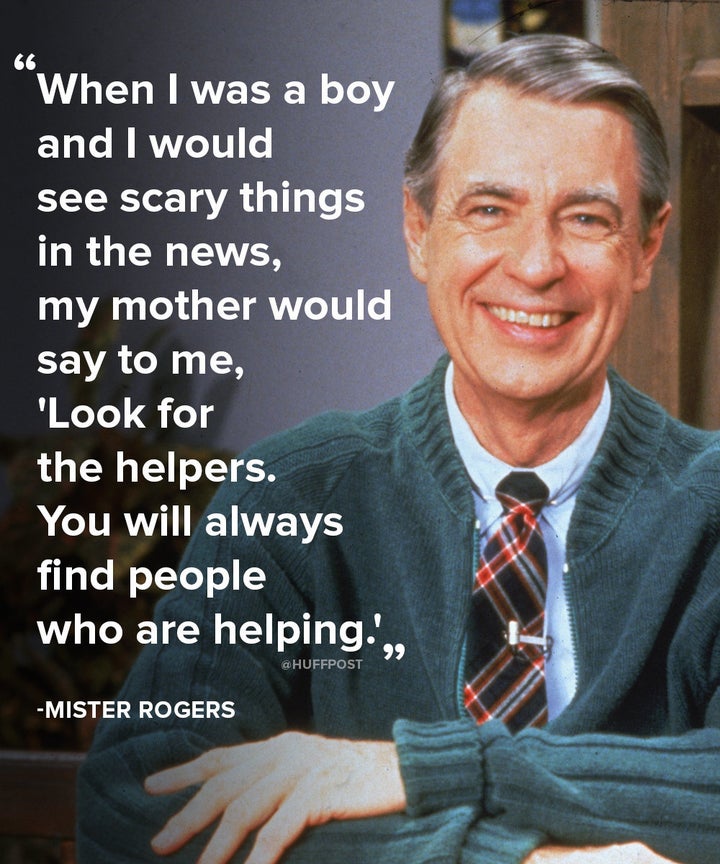
I like this book because it reminds me of the Fred Rogers quote about helpers.

Why Mister Rogers' Plea To 'Look For The Helpers' Still Resonates Today |  HuffPost Life


H

This is another great example of looking towards the heroes and helpers! This book tells the story of Welles Remy Crowther, an equity trader and volunteer firefighter who worked in the World Trade Center on that fateful day of the attacks. With no thought of himself, he saved numerous people from the upper floors of the World Trade Center South Tower.


This book gives a glimpse into how magnificent the Twin Towers were before the tragedy struck.  It tells the story of a French aerialist, Philipe Petit, who in 1974, threw a tightrope between the two towers of the World Trade Center and spent almost an hour doing acrobatic tricks a quarter mile away from the ground! 


If you have students who would like to read more about 9/11, my students have loved the following two chapter books as well!


My students always love the I Survived series, and this one was no different. This book tells the story of Lucas, whose father is a fire fighter.  Lucas isn't supposed to be in Manhattan on 9/11, but he was.  This book tells the story of what he sees and experiences during the event.


This is another book from a series, in particular the What Was series. It tells the story of the Twin Towers - how they came to be the tallest buildings in the world, and how they were destroyed.

Do you have any other suggestions for books to teach students about September 11th?  I'd love to hear in the comments below!


Monday, August 24, 2020

What's In a Name? Celebrating Your Students' Names

Let's talk names! Our names are an important part of our identity and as any teacher knows on the first few weeks of school, it is so important to learn our students' names and get to know them as we build relationships!


This post contains affiliate links. I earn a small commission each time someone makes a purchase using one of my links, which helps to support the blog.  All opinions are my own and I only promote brands and products that I have used myself and truly love.  


Learn Their Names Before You Meet Them

I love freaking my students out by knowing their names ahead of time.  You should see their faces when I greet them by name at the Meet the Teacher night!  I tell them it's because I know everything, but really it is the result of studying!

I use the pictures of my students on our Power School program to create flash cards with their pictures on one side and their names on the other.  I spend a few hours before school starts learning all of their names.

I know I have been guilty of butchering a name or two, so I always ask any student whose name I know I can't pronounce, "How do you say your name?  Names are important, and I want to make sure that I get yours right!"

I also make sure to ask them if they have a nickname they prefer to be called.  One year I had two Elizabeths, but they went by Lizzy and Ellie, so it made life easier!  

Another year I had a little girl who was named after her mom, and went by her middle name.  She was shocked when I said that was the name I would call her.  "My teacher last year said I had to use my given name."  

Teachers, pick your battles!  

My brother was named after my father who left our family shortly after he was born. My mom used his middle name instead.  Every teacher he ever had was ok using his preferred name, and it meant the world to him!  When he was 18 he legally changed his name.  We don't know all of our children's stories, and we should honor their choices.

Start With Some Stories

In many cultures, the names given to children hold significant meaning.  They may be named after a family member or a trait that their parents hoped that the child would embody. I love reading books with my students about names and then having them write stories about how they got their own names.  Two books that I love to read are Alma and How She Got Her Name and The Name Jar.


In this story, Alma struggles with her name (in particular the length of it - Alma .....)and asks her father why her name is so long.  He begins to tell her the story of her name and where each part has been taken from.  


The Name Jar is about a little girl named Unhei who has just moved to the United States from Korea.  She is nervous about her name and if her new friends will think of her name, especially if they can't pronounce it. She tells the class that she will choose a name by the following week.  Trying to be helpful, the class creates a name jar filled with suggestions of names for her.  With the help of a friend, Unhei chooses her own name and helps her new friends to pronounce it.  It is a beautiful story of acceptance!

My students are always fascinated by these stories about names and are anxious to learn and share about their own names.  It is one of the first writing assignments I have them complete, and is a great introduction to doing reasearch!

As students research their own names, you may want to give them this graphic organizer to help them guide their research.


Create Teach Share has a great freebie for having your students write about their names.  You can download it here.


Do you have any questions or comments?  I'm happy to answer any questions you may have or hear your ideas for celebrating your students' names! Leave a comment below.


Related Posts Plugin for WordPress, Blogger...